
Reviewed · UK ISLAND HOPPING
3-Day Orkney Islands Tour from Inverness
Orkney gives you some of Scotland’s most remarkable ancient sites in one compact trip: 5,000-year-old Maeshowe, the stone circles at Stenness and the Ring of Brodgar, and the preserved village of Skara Brae. This tour handles the ferries, driving, route planning, and lodging, which is a major help when you have only three days.
I especially like the small minibus format, with no more than 16 people, and the chance to explore Orkney with a local driver-guide. Guides such as Iain and Mark have been praised for their humor, driving, and local insight. The main drawback is a tight schedule, plus lodging that may be scattered around Kirkwall rather than gathered in one hotel.
Key points to know before booking
- The Heart of Neolithic Orkney is the main event: Maeshowe, Skara Brae, Stenness, and the Ring of Brodgar form the core of the second day.
- Ferries and transport are arranged: You cross from Inverness toward St. Margaret’s Hope and travel around the islands by minibus.
- The group is limited to 16 people: That makes stops and commentary more personal than on a large coach.
- Two nights of accommodation and breakfast are included: You do not need to organize separate lodging in Orkney.
- Kirkwall lodging can vary: You may stay in a comfortable hotel or B&B, but it may be outside the town center.
- The schedule is full: You see a lot, but time in Kirkwall and at some major sites can feel short.
Why this Orkney tour works well from Inverness
Orkney is not a quick side trip. You need ferries, a place to sleep, a vehicle, and a sensible route across several islands. Organizing all of that independently is possible, but it takes time and leaves you responsible for every connection.
This three-day trip removes most of that work. You meet at 25 Union Street in Inverness at 8:00 a.m., then travel with a local driver-guide by ferry and minibus. The route is planned around the islands’ major sights, so you spend your time seeing Orkney rather than sorting out transport.
The group size is another strong point. With a maximum of 16 people, the minibus is small enough for the guide to answer questions and keep the group moving. Several guides have received particular praise for being funny, helpful, and calm behind the wheel. Iain and Mark are two names that have come up positively, though your guide will depend on the departure date.
The tour costs $726.77 per person, so it is not a budget outing. Still, that price includes transportation from Inverness, two nights of accommodation, two breakfasts, and the services of a driver-guide. For you, the value depends on how much you want to avoid planning ferries, driving, and lodging yourself.
One detail needs attention before you pay: the information lists entrance fees for Maeshowe, Skara Brae, and the Italian Chapel as included, while the individual stop notes say admission is not included. Ask the operator to confirm exactly which admissions are covered for your departure. Food and drinks are not included.
More Three-Day Trips in the world:
- El Nido to Coron: 3-Day 2-Night Island-Hopping Expedition
★ 4.7 · 343 reviews - From NYC: Niagara Falls & 1000 Islands 3-Day Tour
★ 4.6 · 214 reviews - Niagara Falls, Toronto and 1000 Islands, 3 Day Tour from NYC
★ 4.5 · 114 reviews
Day one: ferry views, the Italian Chapel, and the Churchill Barriers
The first morning starts early, but that is necessary. Orkney sits off Scotland’s northern coast, and the ferry crossing is part of the experience rather than a minor transfer. Expect a blustery passage across the North Sea, with weather playing a real role in how comfortable the crossing feels.
Your first featured stop is the Italian Chapel, a small Catholic chapel built by Italian prisoners of war during World War II. Its story is striking because the building was created under difficult conditions, yet it became a carefully finished place of worship.
You have about 30 minutes here. That is enough to see the interior and hear the background, but not enough for a long visit. The chapel is one of those stops where your guide’s explanation adds a great deal, since the building itself is modest and easy to pass over without context.
The route also passes the Churchill Barriers, built to protect the British fleet from submarine attack. These causeways connect several Orkney islands and offer a useful reminder that Orkney’s modern story is not only about prehistoric remains.
The first day is deliberately lighter than the second. After the ferry and road travel, you settle into your Orkney accommodation. Lodging is in or around Kirkwall, but the exact arrangement can vary. Some people receive a hotel room, while others stay at a B&B outside the center.
That variation matters. A B&B can be pleasant and personal, but if you want to walk out for dinner or explore Kirkwall after the sightseeing day, a central hotel may suit you better. If you are traveling alone, select the single-room option when booking. The operator warns that a solo booking without that choice may not be accepted.
Day two: the great prehistoric sites of Orkney
The second day is the heart of the tour. It brings together four major sites that show why Orkney matters far beyond its remote setting.
Maeshowe Chambered Cairn
Maeshowe is a chambered cairn dating back roughly 5,000 years. You spend about an hour here, and the visit provides a close look at one of Orkney’s most important prehistoric monuments.
The attraction is not simply its age. The structure shows careful planning, stonework, and a level of communal effort that changes how you think about prehistoric life. The enclosed chamber also gives the site a different feel from the open stone circles later in the day.
Admission arrangements are worth checking in advance because the supplied tour details conflict on this point. The inclusion list names Maeshowe, but the stop description says admission is not included.
More Island Hopping Tours in the world:
- Santorini: Volcanic Islands Cruise with Hot Springs Visit
★ 4.4 · 10,869 reviews - Stockholm: City Archipelago Sightseeing Cruise with Guide
★ 4.3 · 10,798 reviews - Full-Day Dubrovnik Elaphite Islands Cruise with Lunch and Drinks
★ 5.0 · 8,823 reviews - Blue cave, Mamma Mia and Hvar, 5 islands speedboat tour
★ 5.0 · 7,150 reviews
Skara Brae
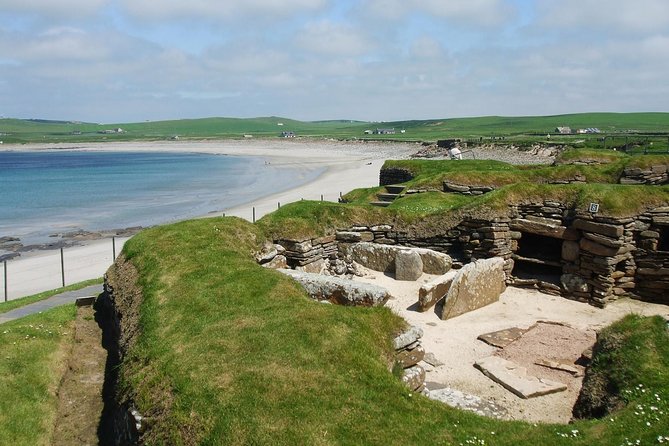
Skara Brae is the emotional high point for many people. Storms exposed this Neolithic village in 1850, revealing stone-built homes that had been covered for centuries. The surviving rooms, walls, and furnishings offer an unusually direct look at daily life in prehistoric Orkney.
You have about an hour at the site. That gives you time to see the village, but the schedule may not leave enough room for every related part of the visit. In particular, you may have to choose between lingering at Skara Brae and seeing the nearby stately home included within the broader site visit.
I would treat Skara Brae as a place to slow down mentally, even if the clock keeps moving. Look at the layout of the homes and imagine how people used the spaces. The power of the site comes from its ordinary details, not from a grand monument.
The Standing Stones of Stenness
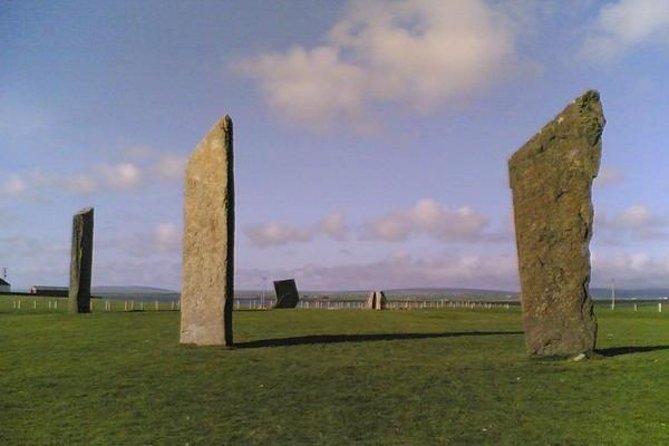
Stenness is a short stop of about 30 minutes. The remaining stones are thought to be among the oldest in the British Isles, and they are the surviving pieces of a much larger ceremonial setting.
The site is open and exposed, so weather can affect the visit. You get a direct sense of scale here: the stones are large, isolated, and surrounded by broad open ground. Unlike an indoor museum, Stenness asks you to read the site with your eyes and imagination.
Admission is listed as free.
The Ring of Brodgar
The Ring of Brodgar is another major stone circle, originally made up of 60 stones, with 36 still surviving. A rock-cut ditch surrounds the circle, and at least 13 prehistoric burial mounds are nearby.
You spend around 30 minutes here, which is enough to walk part of the site and take in its shape. It is not enough for a long circuit at a slow pace, especially if the weather is poor or the ground is wet.
The Ring of Brodgar and Stenness work best together. One site alone might feel like a quick photo stop. Taken as part of the wider prehistoric group, they show how much ceremonial activity was concentrated in this part of Orkney.
What the full day feels like
Day two is packed. You move between sites, listen to commentary, take photographs, and stop for toilets and refreshments. Those breaks are useful, especially on a full-day outing, but they also reduce the time available at the major monuments.
If you enjoy a structured day and want to see the essential sites, this is a strong arrangement. If you prefer long museum visits, quiet walks, or time to read every display, you may find the pace too brisk.
The guide makes a real difference. Good commentary helps connect the monuments instead of leaving you with four unrelated stops. It also helps with practical matters, such as where to walk, how long you have, and when to return to the minibus.
You should bring sensible footwear and clothing for exposed outdoor sites. The tour requires a moderate level of physical fitness, and much of the experience involves walking outside. The tour details do not promise specific accessibility arrangements beyond allowing service animals, so contact the operator if you have mobility concerns.
Evening in Kirkwall: useful free time, but not guaranteed central lodging
Evenings are intended for relaxing, dinner, or exploring Kirkwall. The town gives you a welcome change after a day among open fields and ancient stones. St. Magnus Cathedral is one of the key sights in Kirkwall and is included in the wider route description.
The catch is timing. You may not have enough free time to see the cathedral, Bishop’s Palace, and other local sights while they are open. If Kirkwall is important to you, make a plan before the tour and use any available evening time carefully.
Accommodation can be a little uneven. Some people are placed in a clean, comfortable hotel with good food. Others may find their B&B scattered some distance from the town center. The operator does not promise that the whole group will stay together.
That is especially important for solo visitors. A central hotel may cost more if arranged independently, but it can make the evening feel easier and less isolated. Ask what accommodation style is available before booking if location matters to you.
Day three: returning by ferry and Dunrobin Castle
The final day begins with the return ferry to mainland Scotland. As on the outward journey, the crossing depends on conditions, so leave your wider trip schedule some breathing room after the tour ends.
The final stop is Dunrobin Castle and Gardens, home of the Dukes of Sutherland. You have about an hour and a half to explore the castle and grounds. The visit adds a grand Scottish estate to a trip otherwise centered on prehistoric archaeology and island life.
If conditions and timing cooperate, you may also see a falconry display. The tour describes this as a possibility rather than a guarantee, so do not book this trip solely for the display.
Dunrobin is a useful final stop because it breaks up the journey home. You are not simply transferred back to Inverness after the ferry. Instead, you get another substantial sight before returning to the original meeting point.
Transport, luggage, and daily comfort
The minibus is a practical choice for Orkney’s roads and smaller stops. The maximum group size is 16, though actual departures can be smaller. One group of nine found the arrangement especially comfortable, but the exact vehicle and group size may vary.
Luggage is restricted to 15 kilograms per person, with a maximum size of 55 by 40 by 20 centimeters, plus a small carry-on. Pack lightly. A large suitcase may not fit the tour’s storage arrangements.
There are regular stops for toilets and refreshments. That helps make the long driving days manageable, but it also contributes to the feeling that the schedule is full. Food and drinks are your responsibility unless breakfast is specified.
The tour is offered in English and uses a mobile ticket. Confirmation is sent when you book. Service animals are allowed, and the meeting point is near public transportation.
Children under three are not accepted, and valid identification may be required at check-in. Room arrangements also need care: double and twin rooms are for two people, while three people choosing that option may receive a family room if available. If three people want separate rooms, one person must select the single-room option.
Who should book this three-day Orkney trip?
I would choose this tour if you are staying in Inverness and want a strong first look at Orkney without renting a car. It is especially useful for you if ferries, unfamiliar roads, and accommodation planning sound like more work than fun.
It suits people who want:
- The major prehistoric sites in one organized route
- A local guide and driver
- Two nights on Orkney
- A small group rather than a large coach
- A mix of ancient sites, wartime history, Kirkwall, and a castle
- A practical introduction before returning for a longer independent stay
I would hesitate if your priority is slow travel. You may want more time at Skara Brae, more hours in Kirkwall, or a full visit to every related site. The tour gives you a broad introduction, not an unhurried study of Orkney.
The 91 percent recommendation rate and 4.6 rating from 11 ratings point to a generally strong experience, but the accommodation issue is real. Guide quality has been one of the most praised parts, while the main complaints concern lodging location, limited free time, and occasional uncertainty about route planning on an early departure.
Should you book it?
Book this tour if you want maximum sightseeing with minimum planning. The route covers Orkney’s essential prehistoric monuments, and the ferry, minibus, lodging, and guide are bundled into one trip from Inverness.
Before booking, confirm three things: where you are likely to stay in Kirkwall, exactly which entrance fees are included, and how much free time you will have in town. If you can accept a busy schedule and variable lodging, this is a sensible way to reach Orkney in only three days.
If you already know you want several days of walking, long museum visits, or a central Kirkwall base, travel independently for longer. For a first visit that covers the big sights efficiently, this tour earns its higher price.
FAQ
Where does the tour start?
The tour starts at 25 Union Street, Inverness IV1 1QA, United Kingdom.
What time does the tour begin?
The stated start time is 8:00 a.m.
Where does the tour end?
The tour ends back at the original meeting point in Inverness.
How long is the tour?
The experience lasts approximately three days and includes two nights of accommodation.
What accommodation is included?
Two nights of accommodation are included. The accommodation may be a hotel or B&B, and it may be located outside Kirkwall town center.
Are meals included?
Two breakfasts are included. Food and drinks are not included unless specifically stated.
What luggage can I bring?
You may bring up to 15 kilograms per person, with maximum dimensions of 55 by 40 by 20 centimeters, plus a small carry-on.
Is the tour suitable for young children?
Children under three years old are not accepted.
Newest island reviews around the world
- Zakynthos Premium 4×4 Island Experience★ 4.4 · 7 reviews
- Zadar:Speedboat Tour with Snorkeling on 3 islands★ 5.0 · 3 reviews
- Zadar: Three Islands Private Boat Tour★ 5.0 · 80 reviews
- Zadar: Island-Hopping Blue Lagoon Boat Tour with Drink★ 4.9 · 148 reviews
- Zanzibar: Luxury Speedboat Island Hopping Tour★ 5.0 · 2 reviews
- Zadar: Private Sunset Sailing Tour in Zadar Archipelago★ 5.0 · 26 reviews
- Zadar: Island-Hopping, Swimming & Snorkeling SpeedBoat Tour★ 5.0 · 33 reviews
- Zadar: Three island Daysailing tour★ 5.0 · 4 reviews
UK Island Hopping, compared.
Seabird & Seal Farne Islands Cruise. 1.5 hours long. Departing from Seahouses.
Read our review →
Isle of Skye, Sealife & Islands Tour 3 Days with Luke Skye-Walker
Read our review →Isle of Skye, Highlands and Islands Tour from Glasgow – 7 Days
Read our review →
3 Sides to 1 Island Hebridean Sense Explore Connect Experience
Read our review →Browse the lists this tour appears in