
Reviewed · PERU ISLAND HOPPING
From Puno: 3-Hour Uros Floating Islands Tour
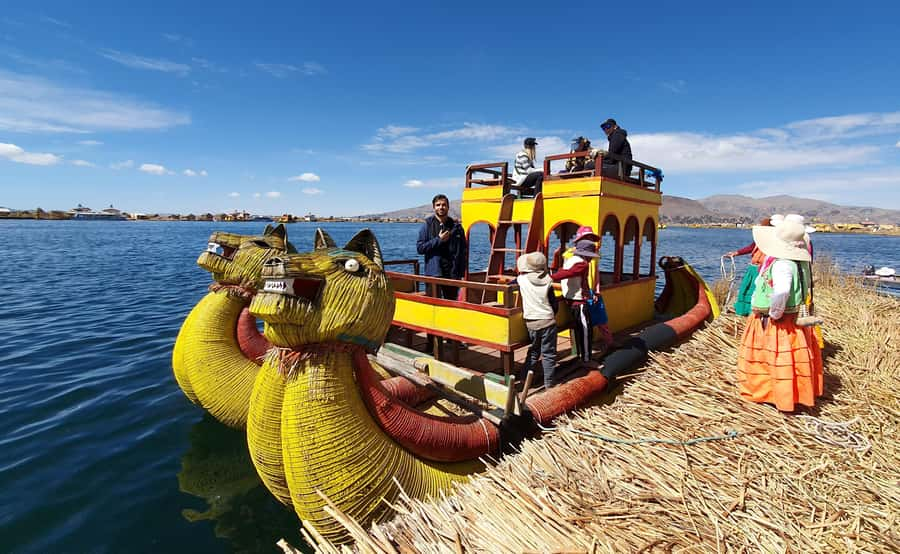
The Uros islands are made from layers of totora reeds, and they actually flex slightly beneath your feet. That simple fact makes this more than a boat trip on Lake Titicaca. You get a close look at how families build homes, maintain their island, and live on water far from Puno.
I like the short boat ride, which gives you broad views toward the Andes without eating up a full day. I also like the choice of departure times, plus the chance to spend time at family homes instead of only taking a quick photo. The main drawback is that some stops can feel commercial, especially when crafts and optional boat rides are presented alongside the cultural explanations.
Key points to know before you book
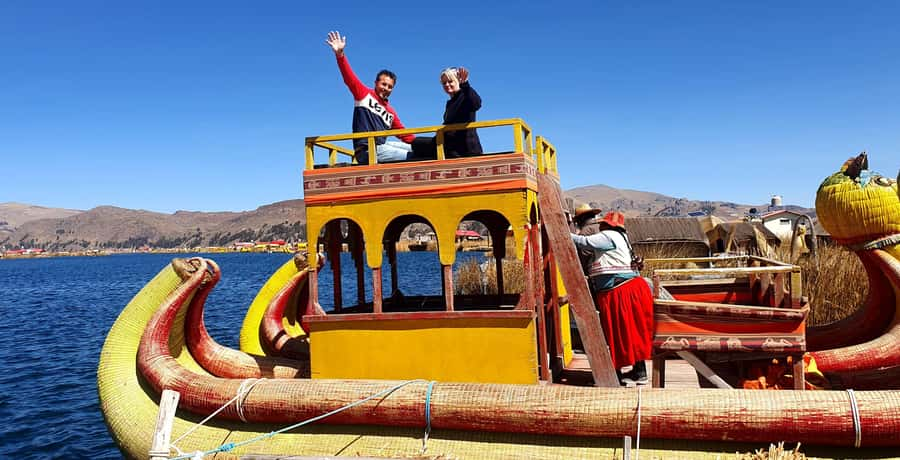
- Totora reeds support everything: Walk across floating islands made from layered reeds and see how fresh material is added over time.
- Two island stops: Visit a main community island, then a second island with lookout platforms, snacks, crafts, and a Uros passport stamp.
- About 25 to 30 minutes each way: The motorboat ride is short enough for a half-day outing and offers open views across Lake Titicaca.
- Private tours can change the feel: Guides such as Richard, Hugo, Omar, and Samuel have received especially warm praise for their English and personal attention.
- The reed-boat ride costs extra: Plan on S/20, about $5, per person for roughly 20 minutes, paid directly to the local families.
- Flexible scheduling: Depart at 9:00 AM, noon, or 3:00 PM, with pickup in central Puno or at one of the listed meeting points.
Why the Uros islands make a memorable half-day from Puno
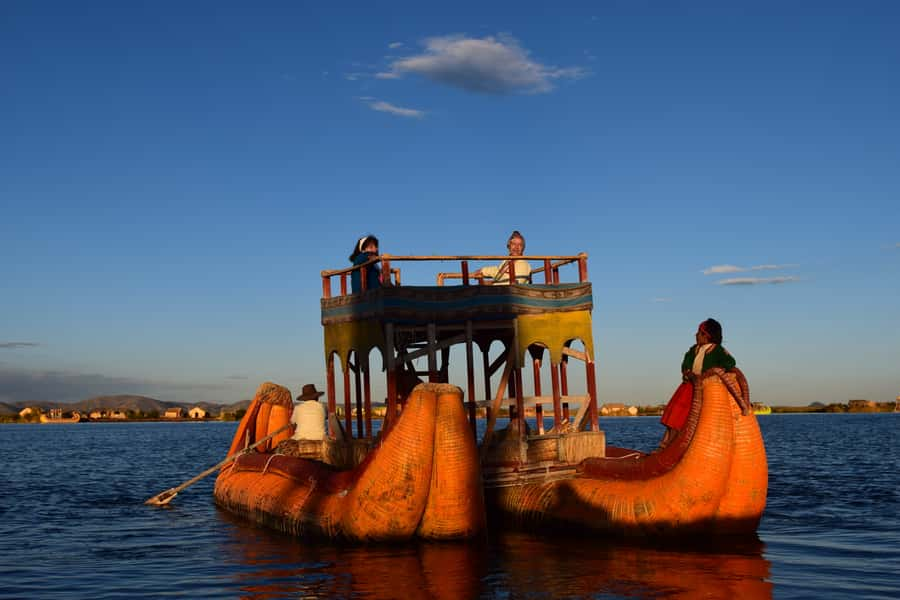
The Uros floating islands are close to Puno, but the change in setting is immediate. You leave the city port by motorboat and head across Lake Titicaca, with open water replacing streets and buildings. Within roughly half an hour, the boat reaches islands built not from stone or soil, but from totora reeds.
The Uros people have used these reeds for generations. They form the island base, walkways, homes, boats, and many household objects. The tour gives you a chance to see the material up close rather than simply hearing about it from shore.
I find the scale of the visit useful. You do not need a full day, a long transfer, or a complicated connection from Puno. Three hours is enough to see two islands and still leave time for another activity, a relaxed lunch, or a train connection later in the day.
The setting also makes the morning and late afternoon departures appealing. At 9:00 AM, you have the rest of the day ahead. The noon departure works well if you prefer a slower start. The 3:00 PM option may suit you if your morning is occupied, though the exact feel of the lake will depend on the light and weather.
More Three-Hour Experiences in the world:
- 3-Hour 1000 Islands Cruise from Gananoque with views of Boldt Castle
★ 4.0 · 388 reviews - 3 Hours // Hole in the Rock Cruise & Bay of Islands Tour
★ 5.0 · 91 reviews - Private 3-Hour Eco Tour with Island Hopping in St. Petersburg, FL
★ 5.0 · 14 reviews
Getting from Puno port to the reed islands
Pickup is available from central Puno locations, including Plaza Mayor, Pino Park, and Parque de las Aguas. You may also be given a pickup and drop-off point simply listed as Puno. Confirm the exact meeting place when you book, since the tour may be arranged around a central pickup rather than your particular hotel.
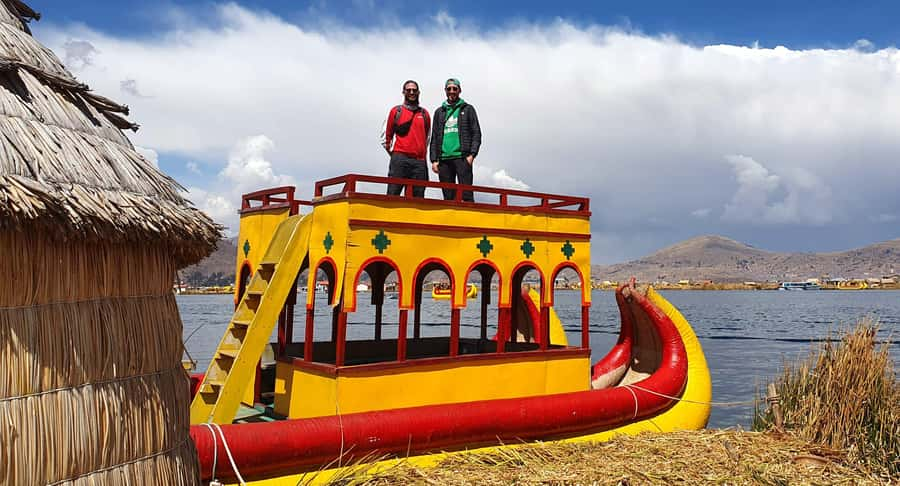
At the port, you board a motorboat with panoramic windows. The ride takes about 25 to 30 minutes each way. That is long enough to enjoy the lake and hear the guide explain the Uros way of life, but short enough that the transfer does not dominate the outing.
The boat is one of the stronger parts of the experience. Some departures use a larger, comfortable boat, and private groups may have the vessel largely to themselves. One private party even arranged pickup from a hotel pier rather than going into central Puno, though you should treat that as a possible custom arrangement, not a standard promise.
If your boat has access to a top deck, take advantage of it for the clearest views. The open water, distant Andes, and low reed islands make the journey feel like part of the tour, not just transportation. Keep your passport or ID card with you, since it is specifically listed as something to bring.
Seeing how a floating island is built
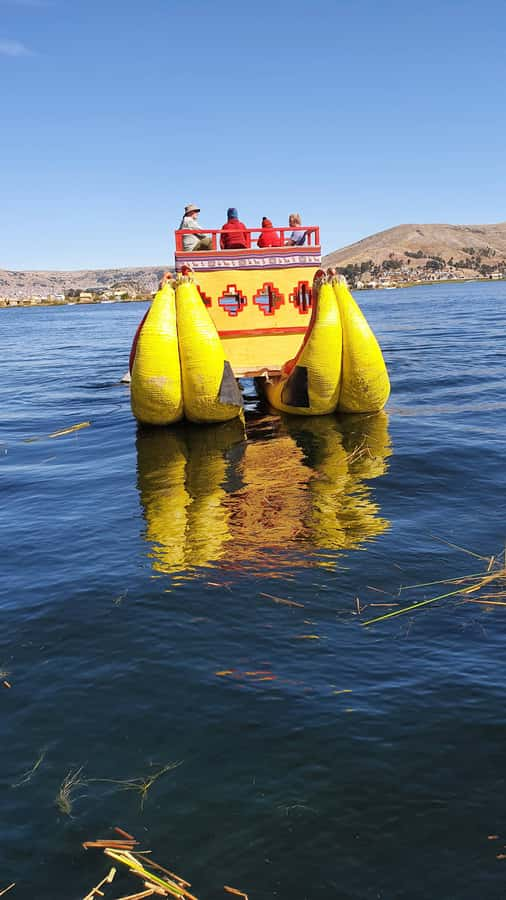
The first island is the main teaching stop. Here, you walk across the reed surface, see family homes, and learn how the islands are maintained. The guide explains how layers of totora are placed and renewed, while local residents show you the practical side of island life.
The reeds do not last forever. Fresh layers must be added as the lower material breaks down. That ongoing work helps you understand why the islands are not simply an old curiosity preserved for visitors. They require care, labor, and regular repair.
The visit is most rewarding when you ask direct questions. Ask how homes are arranged, how the reeds are gathered, how people move between islands, and which parts of daily life have changed. English-speaking guides including Richard, Hugo, Omar, Samuel, and others have been praised for explaining both the islands and wider life around Puno. Your assigned guide may be different, but the tour is offered in English and Spanish.
You can also visit the family homes and see traditional clothing. Dressing in Uros clothing for a photograph is optional. It can be a lighthearted way to remember the visit, but you should feel no pressure to do it.
This is also the point where expectations matter. The islands receive organized tours, and local families sell handmade crafts. One part of the visit may feel like a cultural demonstration followed by shopping. That does not erase the value of seeing the construction and meeting residents, but it means you should not expect an untouched village with no visitor economy.
The second island and its wide lake views

The second stop is more relaxed. Wooden lookout platforms provide broad views across Lake Titicaca, and you have time to move around without following a constant stream of explanations. This is a good place to slow down and take in the scale of the lake.
You can browse handmade crafts, buy a snack, or get a passport stamped with the Uros seal. The stamp is a small detail, but it gives the stop a personal souvenir without requiring a large purchase.
The second island also gives you a chance to decide how much shopping you want to do. If you enjoy local crafts, this is a useful opportunity to look carefully and buy directly from the families. If you are not shopping, use the lookout platforms and free time to enjoy the view instead.
The total island visit lasts about 1.5 hours. That is enough to cover two islands, but it is not a slow cultural retreat. You will want to listen closely during the explanations and use the free time well.
More Island Hopping Tours in the world:
- Santorini: Volcanic Islands Cruise with Hot Springs Visit
★ 4.4 · 10,869 reviews - Stockholm: City Archipelago Sightseeing Cruise with Guide
★ 4.3 · 10,798 reviews - Full-Day Dubrovnik Elaphite Islands Cruise with Lunch and Drinks
★ 5.0 · 8,823 reviews - Blue cave, Mamma Mia and Hvar, 5 islands speedboat tour
★ 5.0 · 7,150 reviews
The optional totora boat ride
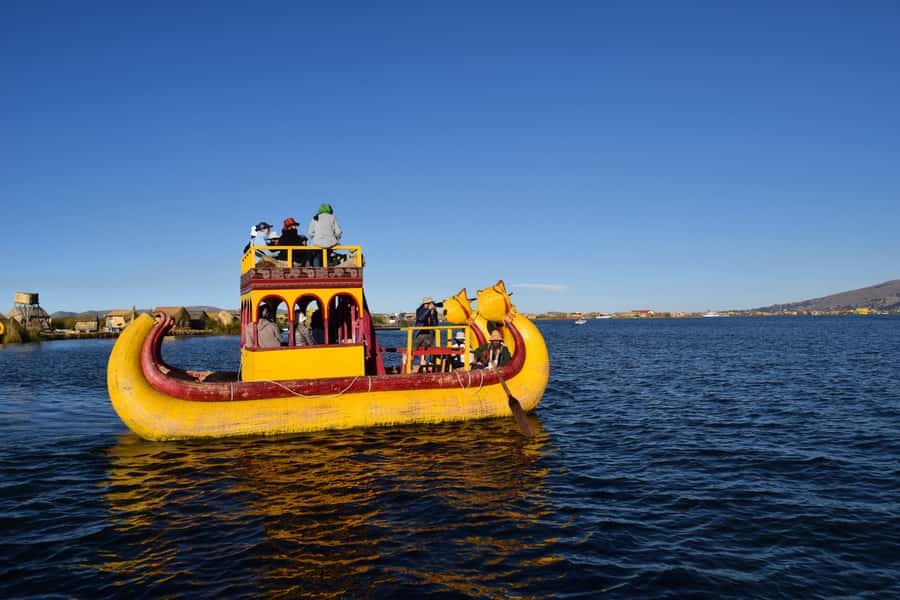
A traditional reed-boat ride is available for about S/20, or roughly $5, per person. It lasts around 20 minutes, and you pay the local families directly.
The ride gives you a second look at the material used to create the islands. You are not simply standing on reeds and then leaving. You get to see how a totora boat moves across the lake and how these traditional forms remain part of the visitor experience.
I would treat this as an optional add-on, not a hidden requirement. The main tour includes the motorboat, island entrance fees, and a guide. If you want to keep the cost close to the advertised $39 per person, skip the extra ride. If the traditional boat is part of what drew you to the Uros islands, the modest charge may be worthwhile.
The add-on also brings up the larger question of authenticity. A reed boat ride is a real part of the island presentation, but it is arranged for visitors. Enjoy it for what it is: a brief, hands-on cultural activity, not a normal taxi service for island residents.
Group size changes the experience
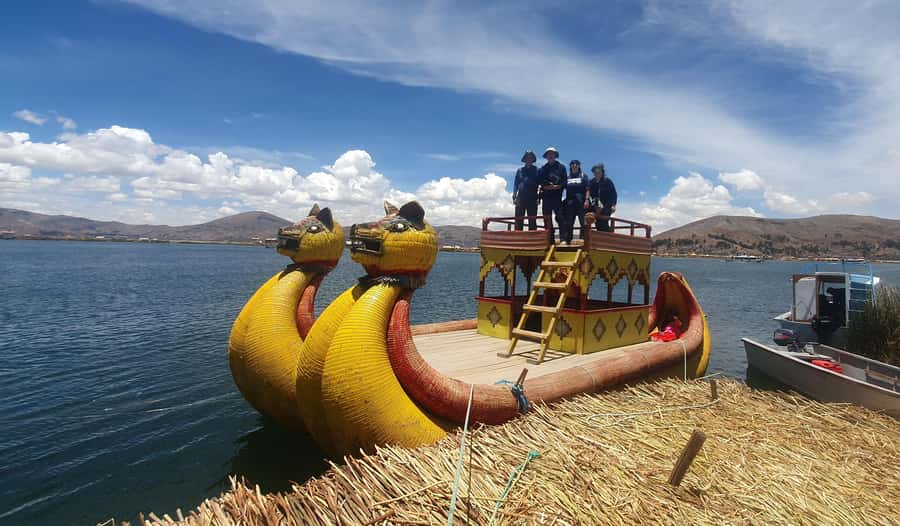
This tour is available as a private or small-group outing. That choice matters more here than it might on a standard sightseeing bus.
With a private tour, you can ask more questions, move at a comfortable pace, and spend extra time at a home or lookout if the schedule allows. Private groups have also benefited from one-on-one attention from guides such as Richard, Hugo, and Omar. A private guide named Omar was especially valued for his personal connection to the islands, having grown up there.
A group tour costs less or follows a more fixed rhythm, but it can still work well. The island visit is compact, and the guide’s explanation gives the stop structure. If you are comfortable sharing the boat and waiting briefly for others, the standard option should provide good value.
The tradeoff is clear. Private touring helps reduce the feeling of being processed through a popular attraction, but it may cost more. One booking selected a private guide and boat for about $30 extra, which made sense for two people who wanted control over timing. Check the exact private-tour price when booking, since the advertised base price is $39 per person.
Price, timing, and what is included
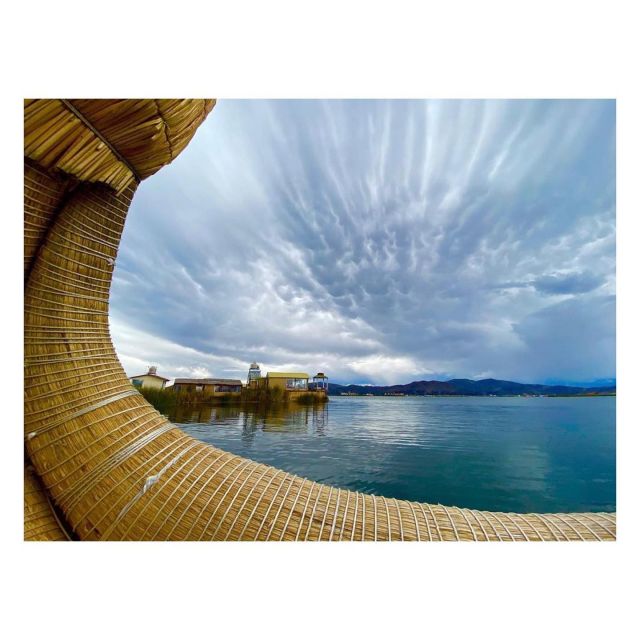
At $39 per person, the tour is fairly priced for a three-hour excursion that includes transport from central Puno, a bilingual guide, entrance fees, and hotel pickup and drop-off where available. The short duration is a real advantage if you are fitting Lake Titicaca into a packed Peru itinerary.
The cost becomes better value if you use the included guide well. Ask questions, pay attention to the island-building explanation, and make use of the free time. If you only want a quick boat ride and photographs, the price may feel less convincing.
Meals are not included, so eat before departure or plan food for afterward. You can buy a snack at the second island, but do not treat that as a full meal plan.
Cancellation is flexible up to 24 hours before departure for a full refund. You can also reserve now and pay later, which helps if your Puno schedule is still moving around. Wheelchair users should choose another activity, since the tour is not suitable for wheelchairs. Smoking indoors is not allowed.
Which departure time should you choose?
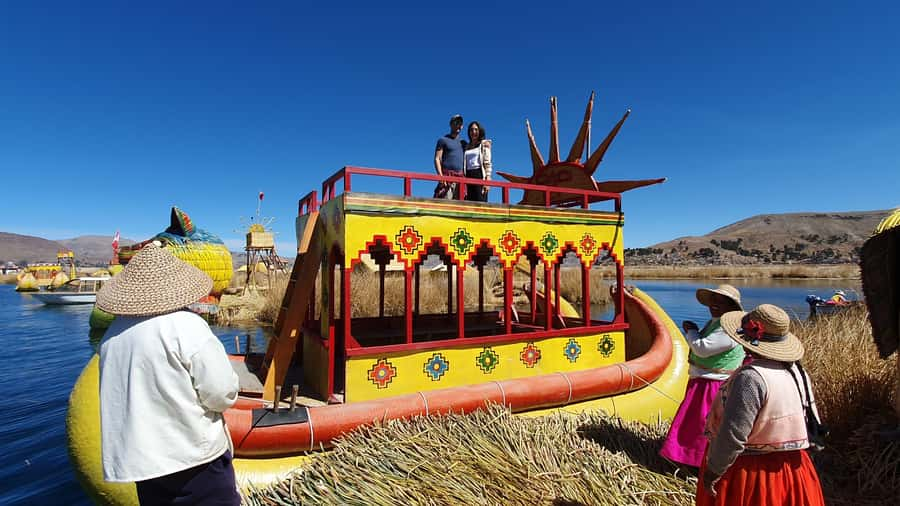
The 9:00 AM departure is the best all-purpose choice. You get a fresh start, return around midday, and keep the afternoon open for Puno or another excursion.
The noon departure suits you if you dislike early mornings or have a slow start after arriving in Puno. It also breaks the day neatly, with the lake visit taking up the middle hours.
The 3:00 PM departure is useful for a late arrival or a busy morning. It leaves less time afterward, so check your evening plans. All three departures last about three hours, and each includes the same basic route.
If your schedule is tight, the three-hour format is safer than booking a full-day Lake Titicaca trip. If you want to visit Taquile Island or Amantani Island as well, this outing is only one part of a larger lake plan, not a substitute for those longer journeys.
Who will enjoy this tour most?
I would recommend it to anyone staying in Puno who wants an introduction to Lake Titicaca without giving up an entire day. It also works well for families, couples, and solo visitors who want a guided explanation of the Uros way of life.
It is especially suitable if you value direct conversation. Guides such as Richard and Samuel have been praised for clear English, while Hugo has been noted for his passion for Puno and the Uros community. A good guide makes the difference between simply walking on reeds and understanding why the islands exist.
You should be comfortable with uneven surfaces and a visitor setting. The island walk is not designed for wheelchairs, and the experience includes shopping and optional paid activities. If you want complete solitude or a strictly noncommercial encounter, this may disappoint you.
The private option is worth considering for couples, families, or small groups with a little extra budget. It gives you a better chance to ask questions and avoid rushing. The standard small-group option remains a sound choice if price matters more than flexibility.
Should you book the Uros floating islands tour?
Book this tour if you want a short, practical introduction to the Uros islands from Puno. The boat ride is easy to fit into a wider itinerary, the reed construction is genuinely unusual, and the guides can add real depth when you take time to ask questions.
Choose the private version if personal attention and a slower pace matter to you. Choose the standard option if you want the main sights at $39 per person and do not mind the shopping element.
My main advice is to set your expectations correctly. This is a working cultural attraction that welcomes visitors, not an isolated community untouched by tourism. Go to learn how the islands are made, meet the families, enjoy Lake Titicaca, and decide for yourself how much of the shopping and reed-boat activity you want to join.
FAQ
How long does the Uros floating islands tour last?
The tour lasts approximately three hours, including the boat rides between Puno and the islands.
How far are the Uros islands from Puno?
The islands are about 25 to 30 minutes from Puno’s port by motorboat.
What departure times are available?
Departures are available at 9:00 AM, 12:00 PM, and 3:00 PM.
Is transportation included?
Yes. The tour includes transport by motorboat, along with hotel pickup and drop-off where available. Central meeting points include Plaza Mayor, Pino Park, Parque de las Aguas, and Puno.
Is the traditional reed-boat ride included?
No. The optional ride costs S/20, about $5, per person and lasts around 20 minutes. You pay the local families directly.
What should I bring?
Bring your passport or ID card. The tour is not suitable for wheelchair users, and smoking indoors is not allowed.
Newest island reviews around the world
- Zakynthos Premium 4×4 Island Experience★ 4.4 · 7 reviews
- Zadar:Speedboat Tour with Snorkeling on 3 islands★ 5.0 · 3 reviews
- Zanzibar: Luxury Speedboat Island Hopping Tour★ 5.0 · 2 reviews
- Zadar: Three Islands Private Boat Tour★ 5.0 · 80 reviews
- Zadar: Island-Hopping Blue Lagoon Boat Tour with Drink★ 4.9 · 148 reviews
- Zadar: Private Sunset Sailing Tour in Zadar Archipelago★ 5.0 · 26 reviews
- Zadar: Island-Hopping, Swimming & Snorkeling SpeedBoat Tour★ 5.0 · 33 reviews
- Zadar: Three island Daysailing tour★ 5.0 · 4 reviews
Peru Island Hopping, compared.

From Paracas: Ballestas Islands tour all Inclusive
Read our review →
Callao: Swimming with Sea Lions Palomino Islands Boat Tour
Read our review →
Lima: Sea Lion Swim and Wildlife Palomino Islands Cruise
Read our review →
From San Martin Port: Ballestas Islands Tour in Paracas
Read our review →
Paracas: Ballestas Islands Boat tour – Islas Ballestas
Read our review →
Browse the lists this tour appears in