
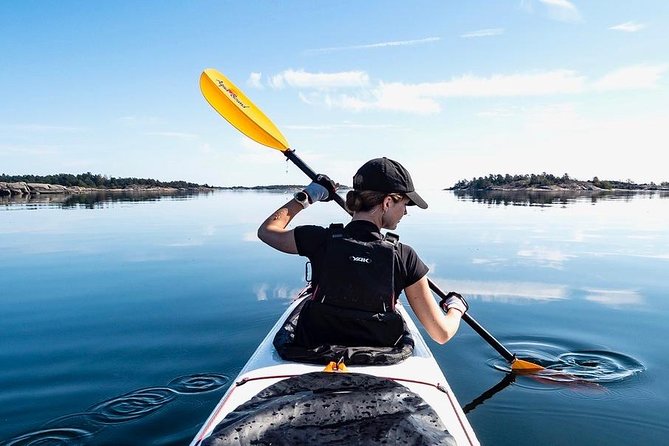
Reviewed · KAYAKING ISLAND TRIPS
Culinary Kayaking Adventure – Saint Anna Archipelago of Sweden
The best part of this four-day trip is the combination of quiet sea kayaking and serious outdoor cooking. You paddle through Sweden’s Saint Anna Archipelago, gather sorrel, chives, juniper, mushrooms, and berries, then help turn them into dinner over a campfire. Chef Helena leads the food side, while guides such as Thomas, Tomas, and Rob handle paddling, camp, and wilderness skills.
I especially like the small group limit of eight and the way the food gives the trip a purpose beyond sightseeing. I also like the easy Norrköping pickup, which removes much of the fuss from reaching the islands. The main caution is simple: this is still a camping and paddling trip. The outer archipelago can mean a strenuous day on the water, and rain or wind can change the feel of the experience quickly.
Key things to know before you book
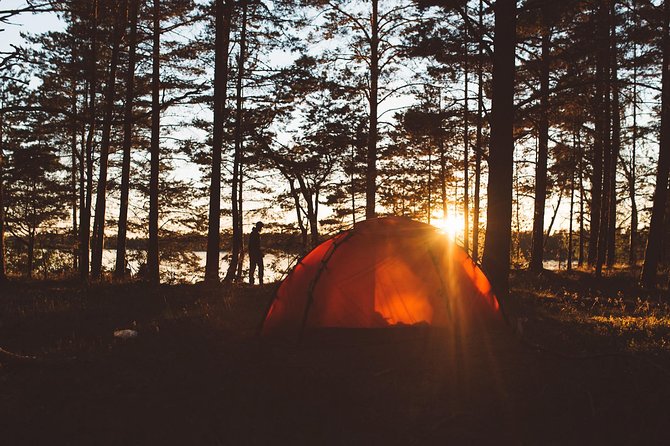
- Foraging becomes dinner: You gather edible greens, berries, herbs, mushrooms, and other island plants, then use them in shared meals.
- The route changes by weather: The outer islands are visited only when conditions allow, so the exact paddling plan can shift.
- Beginners can join: You do not need previous kayaking experience, but you should have a genuine interest in cooking and outdoor activity.
- Small groups matter: A maximum of eight people makes it easier to learn, help with camp, and get direct guidance.
- The food is a major reason to go: Expect three breakfasts, three lunches, three dinners, coffee or tea, and alcoholic drinks.
- Plan around Norrköping: Pickup starts at 10:00 a.m. from the train station or a hotel or hostel in town.
Four days among the islands

This is not a standard sightseeing cruise with a meal served while you watch the scenery go by. You carry your own small expedition forward by kayak, stop to collect ingredients, help prepare camp, and sit down to food that has a real connection to the place.
The Saint Anna Archipelago changes as you move away from the mainland. Near the inner islands, you see large wooded islands, old wooden homes, bays, and traces of long-settled rural life. Farther out, the islands grow smaller and barer, with wind-shaped pines, salt-tolerant plants, open sea, and very little sign of modern life.
The schedule allows time for both paddling and cooking. You are active during the day, but the trip is not built around racing from one sight to another. That slower pace is important. You have time to notice the plants at your feet, watch birds over the water, and learn how a meal comes together with limited equipment.
More Kayaking Island Trips in Sweden:
- 1-Day Small-Group Stockholm Archipelago Kayak Tour
★ 5.0 · 266 reviews - Stockholm: Archipelago Islands Kayak Tour and Outdoor Picnic
★ 4.9 · 227 reviews - Stockholm Archipelago Tour by Kayak
★ 5.0 · 99 reviews
Day one: old island homes and a first camp
Pickup begins at 10:00 a.m. in Norrköping. You can be collected at the train station or at a hotel or hostel of your choice, making an overnight stay in town the easiest plan. Norrköping is also a practical base if you are arriving by train from Stockholm or by shuttle from Stockholm Skavsta Airport.
The first paddling section takes you into the inner archipelago. Large forested islands surround the route, and old wooden houses sit around the bays. This opening section gives you a gentle introduction to the setting. Instead of meeting the open sea at once, you start among sheltered water and settled island communities.
After a short paddle, you stop beside a sea meadow. This is one of the area’s distinctive habitats, where plants able to tolerate salt grow along the water’s edge. You forage for edible greens, rose hips, hawthorn, and barberries, including plants that reflect the islands’ earlier farm life.
You then continue through a maze of islands. The route can feel wonderfully confusing in the best way, with water channels opening in several directions and no straight road to follow. By late afternoon, you reach camp, where the food team is already working on the evening meal and preparations for the next day.
You are not expected to sit back while someone else handles everything. The group helps cook dinner and prepares ingredients for later meals. Sorrel, orpine, chives, and juniper berries may find their way into the cooking. That shared work is one of the trip’s strengths, but it also tells you what kind of holiday this is: active, cooperative, and hands-on.
Day two: bird islands and a more wooded camp
The morning begins with the possibility of a quiet swim beside camp. On a calm day, the sea can reflect the sky almost perfectly, making an early dip a memorable way to wake up. Of course, a morning swim is optional, and the water and weather will determine how appealing it feels.
After breakfast, you paddle through bird sanctuaries and clusters of small islands. Sea eagles are a strong possibility, and you might also see seals. The route now feels more open and more remote than the first day, even though the islands remain close together.
The second section reaches the middle part of the archipelago, where small islands appear in greater numbers. The group aims to reach the next camp in the early afternoon. This leaves time to settle in, gather ingredients, and prepare dinner rather than arriving tired just before dark.
The setting changes from pine trees and moss to deciduous woods, open glades, and areas grazed by animals. This variety matters to the cooking. Mushrooms, berries, and meadow herbs offer different ingredients from those found along the saltier shore. Oregano and ground-ivy may be collected for the evening meal.
You should expect to contribute here as well. The cooking is a lesson in outdoor technique, but it is also a group task. The guides create a relaxed mood while asking everyone to help with setup, preparation, and cleanup. If you want a holiday where all meals appear without effort, this is not the right fit. If you enjoy learning by doing, it is a strong match.
Day three: the outer archipelago when weather allows
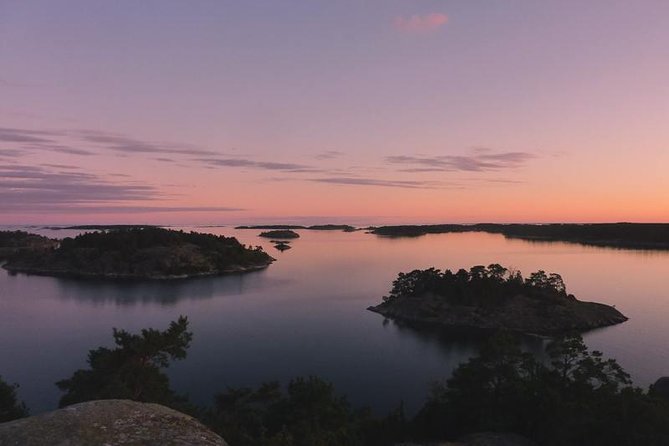
The third day is the most dependent on conditions. If the weather is suitable, the group heads toward the outer archipelago. The change is dramatic. Hundreds of tiny, mostly barren islands replace the larger wooded islands, with only sparse wind-pined trees and plants adapted to salt and exposure.
The horizon opens up, and the sense of solitude grows. This is the trip’s most striking paddling setting, but it is also the part that demands the most from you. The paddle is described as strenuous, so you need to be comfortable spending a substantial part of the day in a kayak.
The route returns to camp by late afternoon. A local fisherman then arrives with the catch of the day, which becomes the centerpiece of a final island feast. The wider Do the North crew may join for the meal, giving the last evening a more social feel than the quieter camp nights.
This dinner is a good example of what makes the trip different from a normal kayak tour. The food is not simply fuel packed in a dry bag. It connects the sea, the local catch, the plants gathered on the islands, and the work the group has done together.
The plan depends on wind and sea conditions, so you should not treat the outer-island route as guaranteed. That flexibility is sensible and protects the quality of the experience. The inner and middle archipelago still offer excellent paddling if the outer islands are unsuitable.
More Island Hopping Tours in Sweden:
- Stockholm: City Archipelago Sightseeing Cruise with Guide
★ 4.3 · 10,798 reviews - Stockholm: Archipelago Boat Tour
★ 4.4 · 3,110 reviews - Stockholm Archipelago Cruise with Guide
★ 4.0 · 1,125 reviews - Gothenburg: Archipelago cruise with guide
★ 4.3 · 1,002 reviews
Day four: a final paddle through the island maze
On the final morning, you pack camp and eat a substantial breakfast before setting out. The route heads toward a different mainland landing point, so you see new bird sanctuaries and more of the waterways before the trip ends.
A narrow canal carries the kayaks out of the island maze. The transition is gradual at first, then suddenly you reach a bay filled with small cabins and old houses. It is a fitting finish: after several days of pine woods, sea meadows, rocky islands, and open water, ordinary settlement returns almost at once.
The day is listed as taking about 12 hours, though that should be read as the full final-day program rather than nonstop paddling. Packing, breakfast, kayaking, and the return to the mainland all form part of the schedule.
You finish with new ideas for cooking outdoors, not just photographs of the archipelago. That practical legacy is a real strength. The trip teaches you to see shoreline plants, berries, herbs, and local fish as part of a meal rather than as background scenery.
The food is the heart of the trip
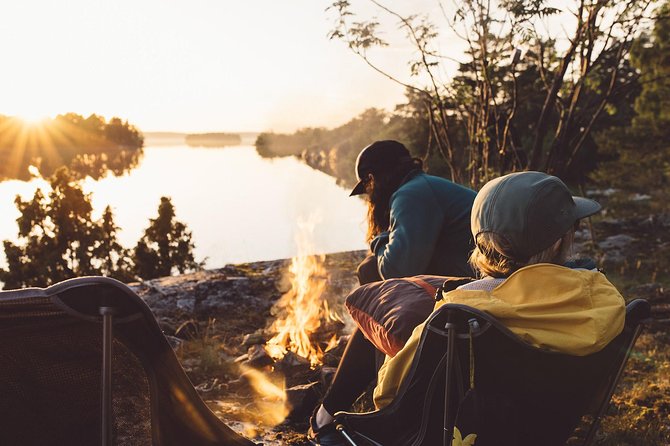
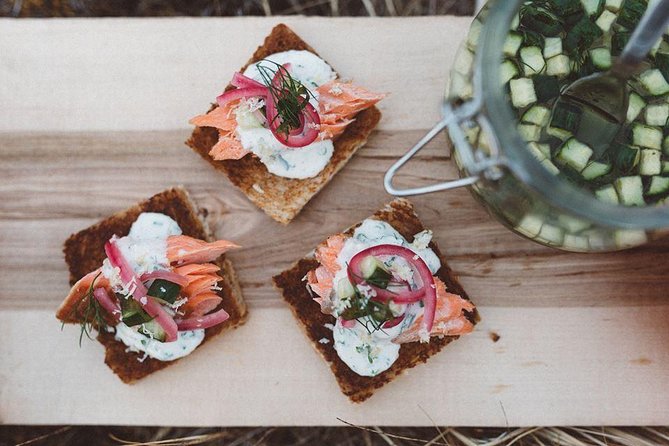
The culinary side is unusually ambitious for a kayak camp. Helena prepares impressive meals over a fire and involves the group in making jams, pickles, and other preparations. The food includes home-made and locally sourced elements, and the menu changes with what can be foraged or brought in locally.
You receive three breakfasts, three lunches, and three dinners, along with coffee or tea and alcoholic drinks. The exact dishes are not fixed in the information provided, which is sensible for a trip based partly on weather, catch, and available plants.
The guides have to make real meals in difficult conditions. One account describes excellent food even during 36 hours of rain, which says something useful about the operation. Still, you should remember that camp cooking relies on weather, fire, equipment, and group participation. It will not have the consistency of a restaurant kitchen.
The food also creates a reason to slow down. Rather than paddling until you are exhausted, eating quickly, and sleeping, you learn a few ingredients, prepare them together, and share the result. I would choose this trip for the food even if the kayaking were only part of the appeal.
Guides, camping, and the small-group feel
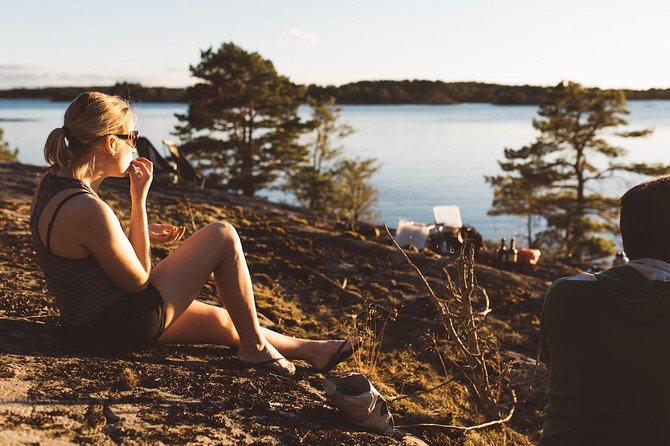
The named guides associated with the trip include Thomas and Tomas for wilderness and kayaking support, Rob for kayaking and camp skills, and Helena for the culinary side. Roles may vary by departure, so you should confirm the guide team when booking.
The support is practical. Rob has helped participants with warm clothing when they arrived underprepared, and Tomas once fashioned a birch splint for an injured wrist and arranged a water taxi so that the person could leave camp while the rest of the group continued by kayak. That does not make the trip risk-free, but it shows the value of having guides who can handle problems calmly.
Camping takes place on islands, including an uninhabited island setting. The provided equipment has been described as high quality, with good tents and comfortable sleeping mats. You still need to pack suitable warm and waterproof clothing. One person had not brought enough warm gear, and the weather can change quickly on open water.
A base-camp style arrangement may be used for some of the paddling, allowing the group to explore from camp rather than carrying everything on every outing. The day-by-day description also refers to reaching different camps, so the exact camp pattern may depend on the departure and conditions. Ask the operator how much camp moving to expect.
The maximum group size is eight. That is small enough for direct instruction and a manageable cooking team, but your enjoyment will still depend partly on the group. Everyone helps with camp and meals, so a cooperative attitude matters.
What the $1,954.27 price really buys
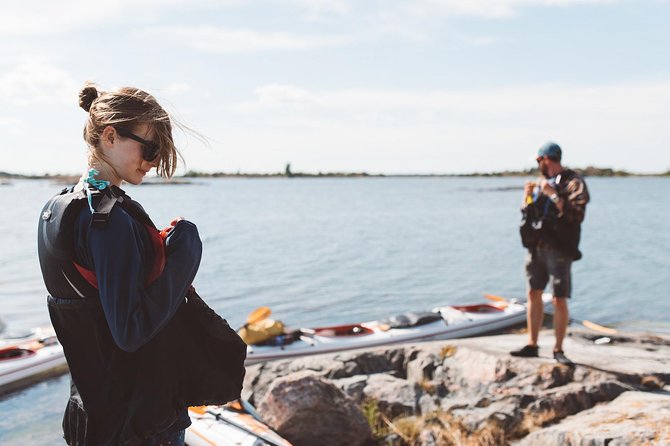
At $1,954.27 per person, this is an expensive short holiday. The value comes from the amount packed into four days: private round-trip transfers, hotel pickup and drop-off, a driver or guide, a local guide, kayaking, camping support, three days of meals, coffee or tea, and alcoholic drinks.
The price also saves you from arranging separate transport between Norrköping and the archipelago. Guides, food planning, camp equipment, route decisions, and safety support are already in place. If you tried to build the same trip yourself, you would need to source kayaks, camping equipment, meals, transfers, and local knowledge.
Flights and airport transfers are not included. You should also budget for a night in Norrköping if your arrival timing requires it. Stockholm Skavsta Airport is about 55 minutes from Norrköping by airport shuttle, Stockholm Arlanda connects by direct train in roughly two hours, and Linköping City Airport is about a 25-minute train ride away, followed by a short taxi trip to the station area.
The value is strongest for someone who genuinely wants the cooking component. If your main aim is simply to paddle the archipelago, a shorter kayak outing should cost less and require less commitment. Here, the food, foraging, transfers, and camp experience are the reason for the higher price.
Who should book, and who should think twice
You should consider this trip if you are at least 18, enjoy hands-on cooking, and like the idea of learning in an outdoor setting. Beginners are welcome in the kayak, so lack of experience alone should not stop you.
You should be comfortable with shared duties, basic camping, changing weather, and a strenuous paddling day if the outer islands are visited. The stated maximum weight is 120 kilograms, and most people can participate, but the trip is not designed as a passive holiday.
This is especially well suited to couples, adult families, and small friend groups who want an unusual shared project. It also works for solo participants who enjoy meeting a small group and contributing to a common meal.
Pack for warmth and wet conditions, even during a favorable forecast. Bring the kind of clothing you would want after a long paddle, not only what looks suitable for a sunny Swedish afternoon.
Practical booking details
Pickup is at 10:00 a.m. in Norrköping, from the train station or a hotel or hostel. Staying in Norrköping the night before is recommended, particularly if you are arriving from abroad.
Confirmation is provided at booking. The experience is offered in English, and the maximum group size is eight. Free cancellation applies up to 24 hours before the start time, while cancellations or changes inside that window are not accepted.
The operator is Do the North AB. Since the outer-island route depends on weather, ask about the expected route, camp setup, and guide names before departure. That small check can help you pack and set expectations correctly.
Should you book the Saint Anna culinary kayak trip?
Book it if you want food and wilderness in equal measure, not if you are merely looking for a kayaking lesson. The strongest parts are the beautiful progression from wooded inner islands to open outer skerries, the thoughtful use of wild ingredients, the small group, and the care put into camp meals.
I would be cautious if you dislike shared chores, uncertain weather, or a physically active schedule. The price is high, but it is easier to justify when you count the transfers, guides, equipment, meals, and four days of organized island living.
For a food-minded adult who wants more than a scenic paddle, this is a special kind of Swedish escape. You return with stories about sea eagles, island camps, local fish, edible plants, and meals you helped make yourself.
FAQ
Where does the tour begin?
Pickup is at 10:00 a.m. in Norrköping, either at the train station or at a hotel or hostel of your choice.
Is kayaking experience required?
No. Beginners are welcome, but you should have a genuine interest in cooking and be comfortable with an active outdoor trip.
What meals are included?
The trip includes three breakfasts, three lunches, and three dinners, plus coffee or tea and alcoholic beverages.
What is the maximum group size?
The maximum is eight participants.
What is the minimum age?
The minimum age is 18.
Are flights and airport transfers included?
No. Flights and airport transfers are not included. You arrange your own connection to Norrköping, where the tour pickup takes place.
Newest island reviews around Sweden
- Vaxholm & Stockholm Archipelago: Guided Excursion, Day Trip★ 4.8 · 41 reviews
- 6 Islands History Walking Tour in Karlskrona★ 5.0 · 4 reviews
- 5-Day Kayak & Wildcamp the Archipelago of Sweden – Self-guided★ 5.0 · 48 reviews
- Guided 5-Day Kayak & Wildcamp the Archipelago of Sweden★ 5.0 · 73 reviews
- 4-Day Kayak & Wildcamp the Archipelago of Sweden – Self-guided★ 5.0 · 16 reviews
- PRIVATE Sunset Kayaking in Stockholm Archipelago Nature Reserve★ 5.0 · 28 reviews
- 2-Day Small-Group Stockholm Archipelago Kayak Tour★ 5.0 · 25 reviews
- Stockholm Archipelago Boat Cruise, Gamla Stan Walking Tour★ 5.0 · 3 reviews
Kayaking Island Trips, compared.
1-Day Small-Group Stockholm Archipelago Kayak Tour
Read our review →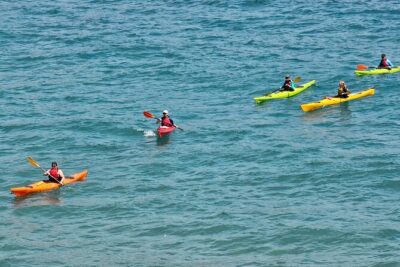
Elafiti Islands Sea kayaking: Full-Day Bike and Kayak tour on Lopud and Šipan
Read our review →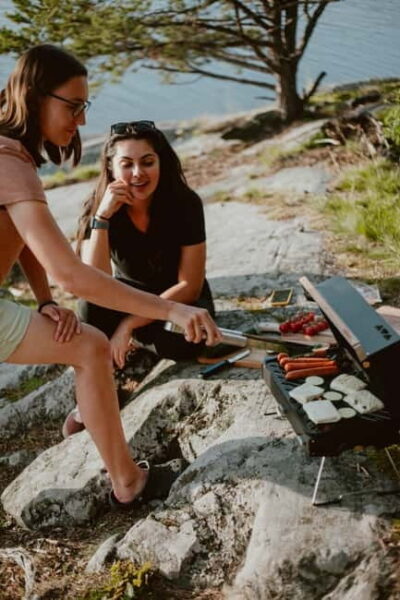
Archipelago Islands Kayak Tour and Outdoor Picnic
Read our review →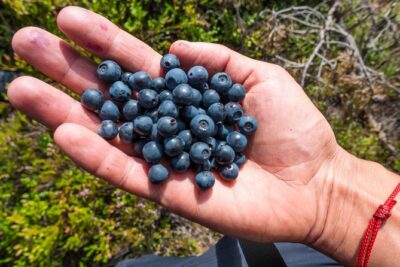
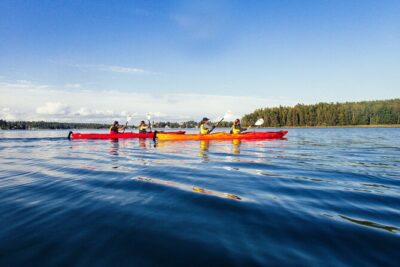
Kayaking tour around Vaxholm Archipelago with Fika
Read our review →
Island Hopping Tour A with Kayaking on Big Lagoon
Read our review →
4 Island Premium Yacht with Snorkeling & Clear Kayak
Read our review →
Browse the lists this tour appears in